Curtain Cleaning Without Shrinkage or Damage
Choose a curtain-cleaning method that suits the fabric, lining and care label. Learn what to check before washing, dry cleaning or using an in-place service.
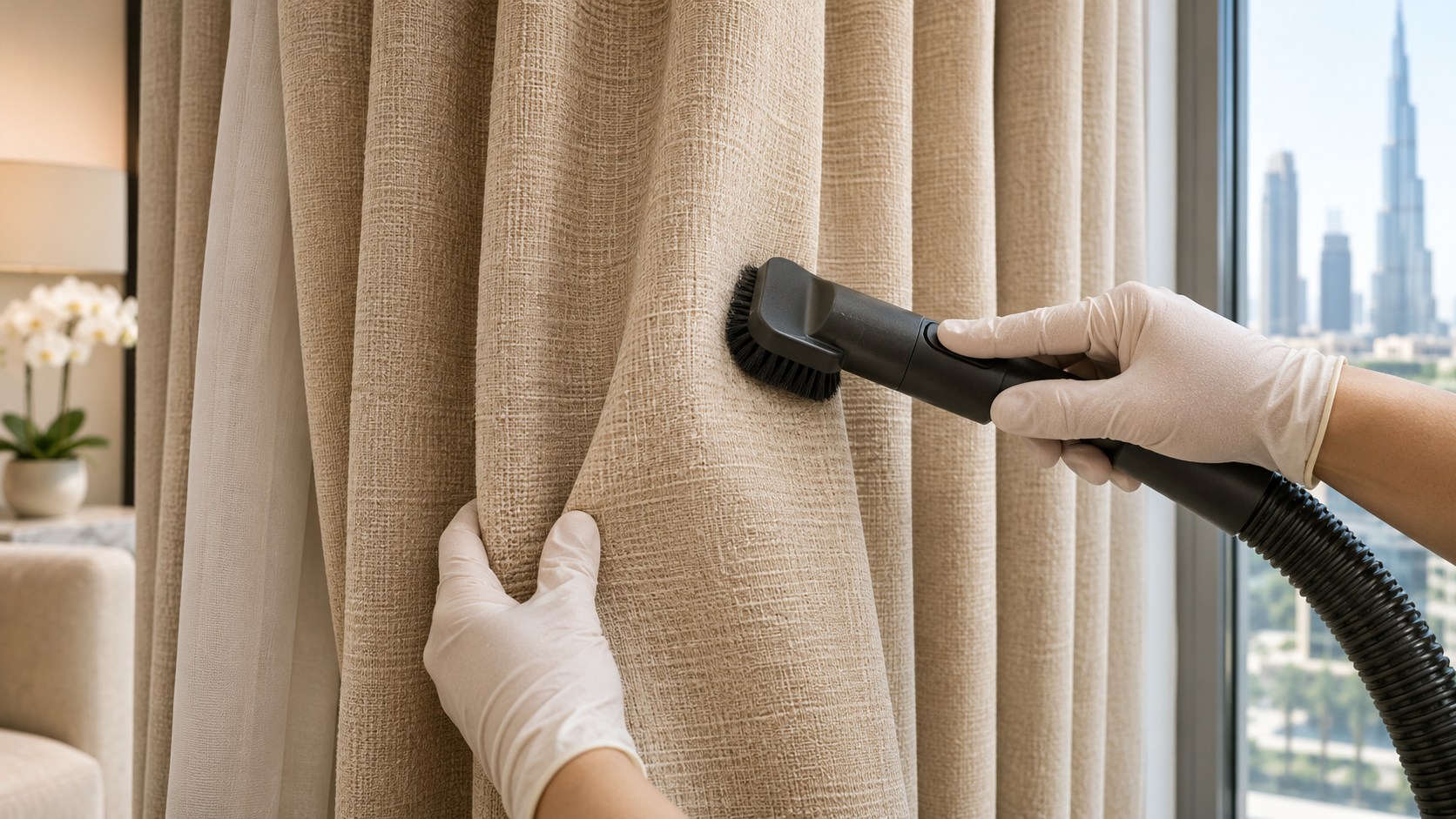
Image for illustration. Check the agreed service scope and expected results.
In this guide
Curtains can collect dust, cooking residue and everyday marks, but the wrong cleaning method can affect their color, texture or fit. The safest starting point is the care label—not a general promise that washing, steaming or dry cleaning suits every curtain.
For Dubai apartments and villas, check the fabric, lining and condition before choosing a service.
Read the label and inspect every layer
Look for care instructions on each panel. Check both the decorative fabric and any blackout or thermal lining, as the complete curtain may need different treatment from an unlined fabric.
Photograph existing fading, loose seams, damaged backing and stains before cleaning. If the label is missing, provide purchase details or ask the original supplier for guidance.
John Lewis recommends checking the specific care label and gives different advice for lined, delicate and washable curtains. Its guidance illustrates why the fabric name alone is not enough to select a method. Curtain-care guidance
Match the method to the curtain
| Method | What to confirm |
|---|---|
| Gentle vacuuming | Suitable attachment, suction and fabric condition |
| Machine or hand washing | Explicit permission on the care label |
| Professional dry cleaning | Correct care process for fabric, lining and trims |
| In-place treatment | Tested compatibility, cleaning scope and drying plan |
Do not assume that blackout curtains are washable. Dunelm, for example, specifies particular dry-cleaning instructions for its blackout and thermal-coated curtains and linings. Follow your own product’s label rather than applying that advice to every brand. Dunelm care guide
Understand the limits of steam
Removing creases with a garment steamer is different from removing embedded soil or treating stains.
Ask what the provider means by “steam cleaning”: the equipment, moisture applied, any cleaning product and whether soil is extracted. Confirm that the method is suitable for the face fabric, lining and backing.
Hillary's distinguishes routine vacuuming, crease treatment and professional cleaning. It also warns that steam on the face of velvet can cause permanent damage.
An in-place service avoids taking curtains down, but that convenience does not establish that the proposed treatment is suitable.
Discuss shrinkage and existing damage before booking
Professional cleaning does not justify an unconditional “zero shrinkage” promise. Hillary's notes that some shrinkage can occur during a first dry clean.
Ask the cleaner to inspect the curtains, explain relevant risks and record the panel dimensions where fit is important. Discuss stains, delicate trims and damaged linings separately.
A hidden-area test can help assess a treatment, but it should not replace the care instructions or an inspection of the whole curtain.
Confirm whether removal, transport, rehanging and adjustment of hooks or pleats are included.
Protect the curtains between full cleans
Where the care instructions permit, remove surface dust gently with a suitable vacuum attachment and low suction. Support the fabric rather than pulling against the track.
Keep windowsills and nearby floors clean, and address condensation or leaks that leave curtains damp. Avoid rubbing stains or applying household mixtures without checking compatibility.
For heavy, high-level or fragile curtains, arrange safe access rather than standing on furniture.
Check the result before completing the service
Review the curtains for remaining marks, changed length, uneven hanging and backing damage. Confirm that they are appropriately dry and aired before use, following the product’s care instructions.
Keep the cleaning record and report concerns promptly. A suitable service should explain what was treated, which limitations remain and how to care for the curtains afterwards.