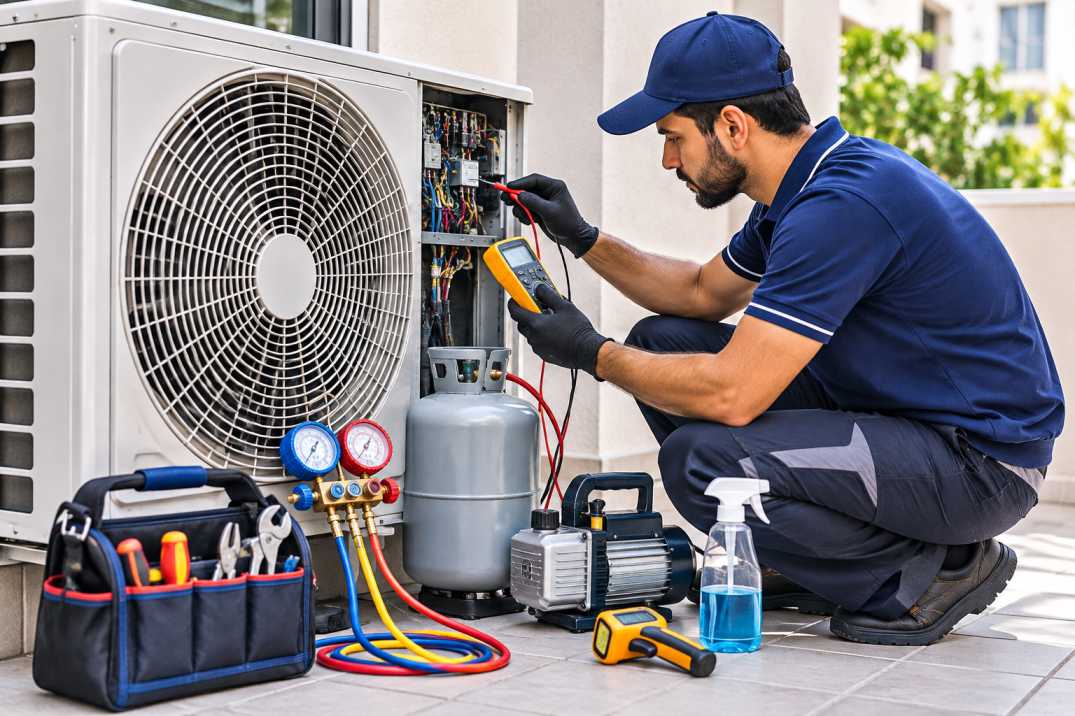
AC Not Cooling in Dubai: What to Check Before Booking a Repair
Check AC settings, airflow and visible symptoms before arranging a repair. Learn when to stop using the system and what information helps a technician diagnose poor cooling.
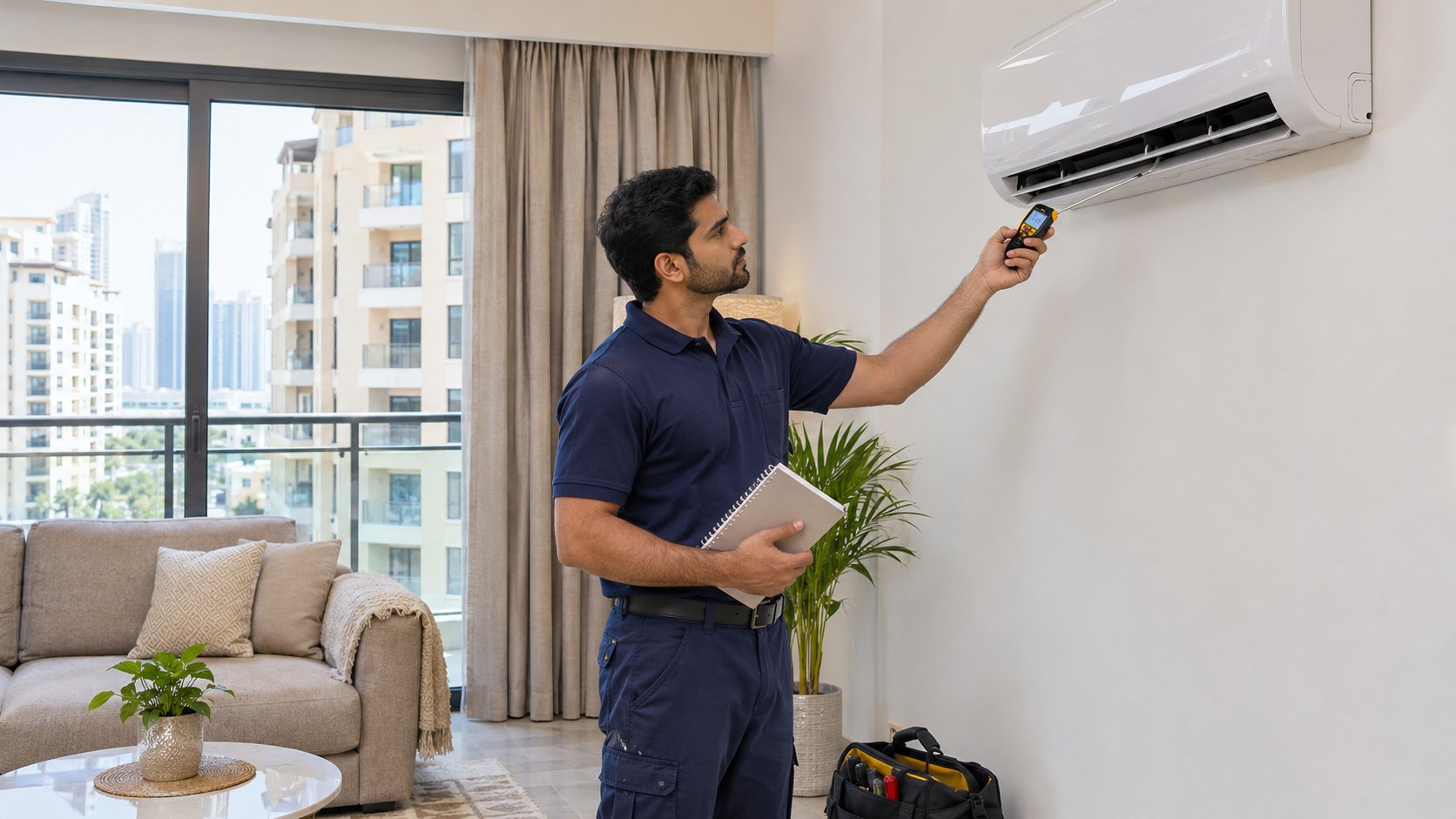
Image for illustration. Check the agreed service scope and expected results.
In this guide
An AC that runs without cooling the room does not automatically need a gas refill or deep cleaning. Start with safe checks, record what is happening and request diagnosis if the problem continues.
The aim is to identify the issue before approving work.
Check the controls and room conditions
Confirm that the controller is set to cooling rather than fan-only mode. Check the selected temperature, fan setting and any timer that could interrupt operation.
Close windows and external doors, and move curtains or furniture blocking the indoor air inlet or outlet. Allow the system to respond according to its operating instructions instead of repeatedly switching it off and on.
Daikin’s troubleshooting guidance identifies settings, filters, obstructions and open windows as useful checks for poor cooling. Follow the instructions for your particular model.
Look for restricted airflow safely
Notice whether airflow is weak throughout the home or only in one room. Check that accessible grilles are unobstructed.
If the equipment manual allows owner maintenance, inspect an easily accessible filter after following the specified shutdown and isolation instructions. Clean or replace it only as directed. Do not open concealed equipment or reach into the unit.
Dirty coils and blower problems can also affect performance, but these require professional assessment. ENERGY STAR identifies coil care, blower maintenance and condensate-drain checks as separate service tasks.
Record the symptoms before the visit
A clear description helps the technician plan the assessment. Avoid guessing the failed component.
| Observation | Useful details |
|---|---|
| Affected areas | One room, several rooms or the whole property |
| Airflow | Weak, normal, intermittent or absent |
| Timing | Constant, afternoon-only or after running for a while |
| Other symptoms | Visible ice, leaks, unusual noise or error codes |
| Previous work | Recent cleaning, repairs or refrigerant additions |
Photograph visible error codes or leaks from a safe position. If you have a room thermometer, record its reading alongside the thermostat setting; the set temperature alone does not show the actual room temperature.
Do not remove panels to obtain photographs.
Know when to stop using the AC
Stop operation and seek qualified assistance if there is a burning smell, repeated breaker tripping or abnormal mechanical noise. Do not repeatedly reset a tripping breaker.
Daikin advises stopping operation and contacting a service provider for these warning signs. Manufacturer guidance
If ice is visible, report it before continuing to run the system or attempting cleaning. Do not chip it away or apply heat. Keep clear of wet electrical equipment.
For district-cooled apartments, tell building management which rooms are affected and ask whether a building-side issue has been reported. Confirm who should assess the in-home equipment and any shared supply concerns.
Ask for findings before approving repairs
Request an explanation of what was checked, what was found and how the proposed work addresses it.
A cleaning recommendation should identify the affected components. Refrigerant work should have a technical justification. Neither should be selected solely because the room feels warm.
Before approving additional work, confirm:
- The diagnosis and supporting findings.
- The proposed repair or cleaning scope.
- Parts, labor, exclusions and total price.
- The checks that will follow completion.
Keep the service report and record any remaining cooling problem. A useful visit should leave you knowing what was investigated, what changed and what still needs attention.