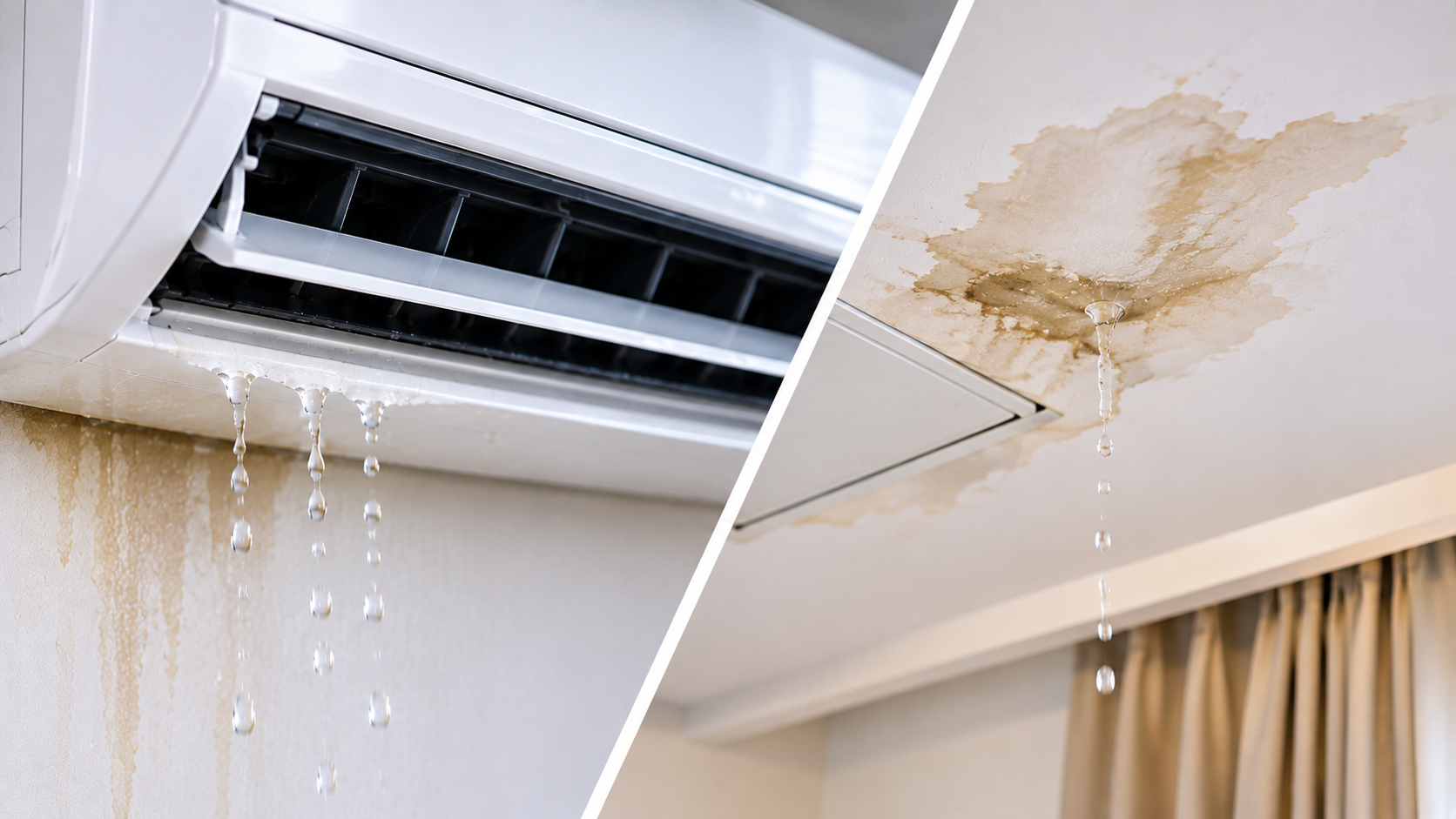
AC Leaking Water in Dubai: What to Check and When to Get Help
Learn what can cause indoor AC water leaks, how to limit damage safely, and what to record before arranging an inspection in your Dubai home.
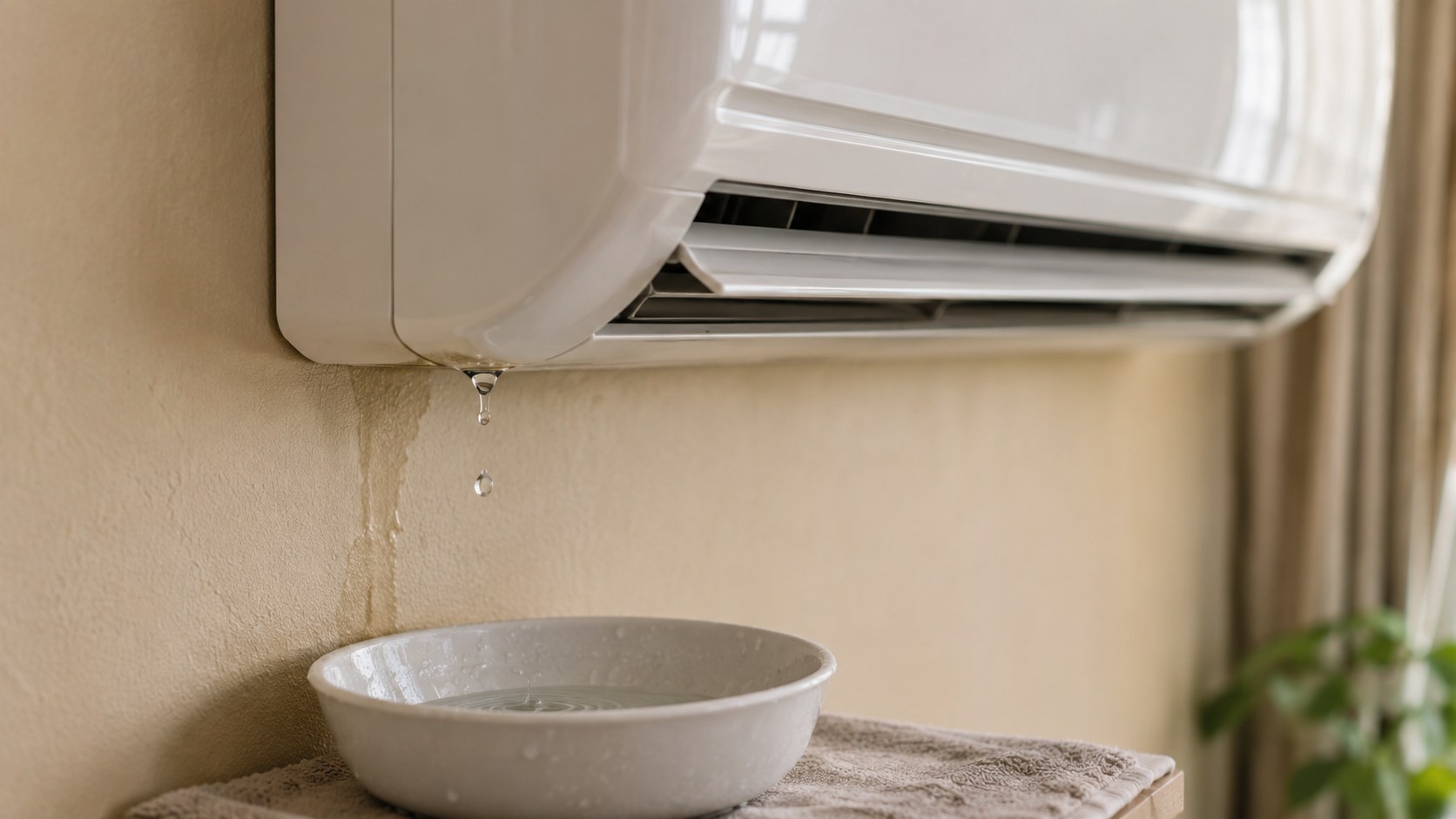
Image for illustration. Check the agreed service scope and expected results.
In this guide
Air conditioning produces condensation as it removes moisture from indoor air. That water should follow the system’s drainage route—not drip onto your furniture, walls or floor.
An indoor leak needs attention, but it does not automatically mean the AC needs refrigerant or a complete deep clean. The first step is to identify where the water is coming from.
Stop the leak from causing more damage
Switch the AC off using its normal controls if it is leaking indoors. Move nearby belongings and, where safe, place a container beneath the drip.
Keep clear of wet electrical fittings. Do not touch wet plugs, switches or equipment, and do not remove panels to investigate. If water is near electrical equipment, seek urgent assistance.
Trane advises shutting down a leaking air handler and arranging an inspection rather than continuing to run it. Water may continue dripping briefly from moisture already inside the system. Trane guidance
For a concealed unit, report ceiling stains or dripping promptly to building management. Do not disturb a wet or sagging ceiling.
Understand the possible causes
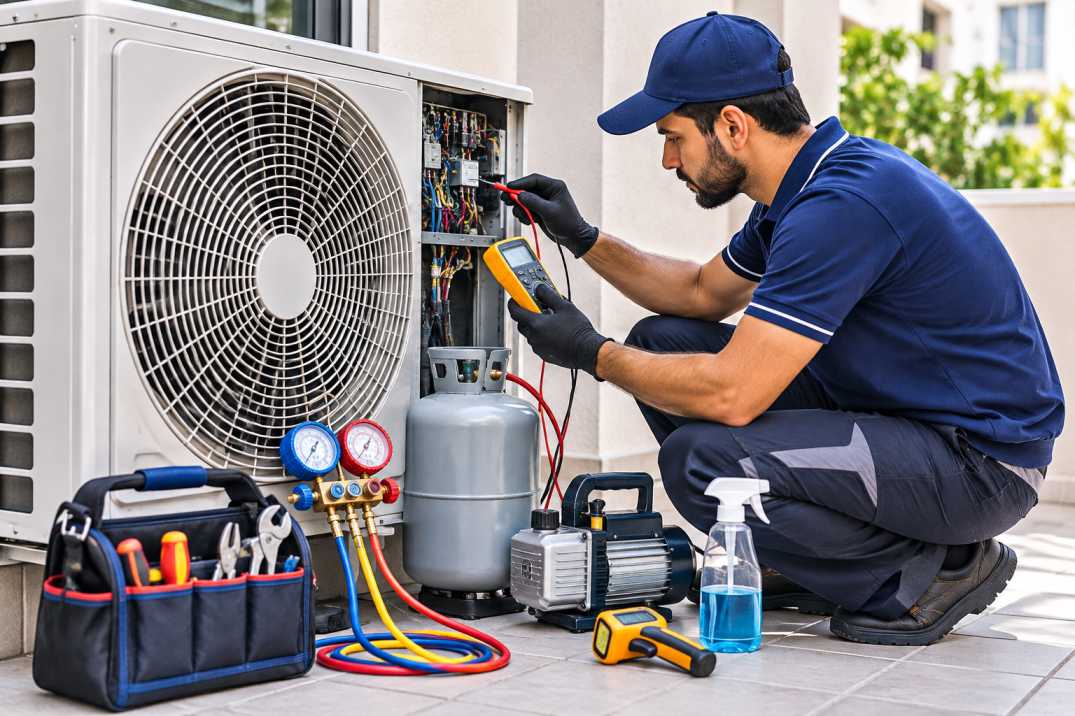
Several faults can produce similar symptoms. A technician should establish the cause before recommending work.
Blocked condensate drain: Accumulated debris can restrict drainage, allowing water to back up.
Damaged drain tray: A cracked or corroded tray may fail to collect and direct the water correctly.
Ice forming on the coil: Restricted airflow or refrigerant-related problems can contribute to icing. Melting ice can then produce leakage.
Carrier identifies drain blockages, frozen coils and damaged drain pans among common causes of AC water leaks. These are possibilities to investigate, not diagnoses based on a photograph alone.
Record where and when it happens
A short observation log helps the technician distinguish between possible causes.
| Observation | What to record |
|---|---|
| Location | Indoor-unit edge, grille, ceiling or nearby pipe |
| Timing | Immediately, after extended use or after shutdown |
| Cooling | Normal, weak or noticeably warmer than usual |
| Visible signs | Ice, damp marks, staining or overflowing water |
| Previous work | Recent cleaning, drain clearing, repairs or installation |
Take photos or a short video from a safe position. Explain whether the leak has happened before and how long any previous repair lasted.
In an apartment, ask building management whether shared pipework or another source also needs investigation. Water near an AC grille does not by itself prove that the AC is the source.
Agree on diagnosis before drain clearing
An accessible drain blockage may be resolved by clearing the line, but this will not repair a damaged tray or explain every case of icing.
Ask the provider to identify the source, describe the proposed work and state any access limitations. Confirm whether the quotation includes inspection, drain clearing, replacement parts or follow-up testing.
Avoid pouring household chemicals into an unidentified pipe or attempting to clear concealed drainage yourself. Carrier recommends professional assistance when signs suggest a condensate blockage.
Check the result after the visit
Ask what was found, what was corrected and which checks were completed. For drainage work, request confirmation that drainage was tested and the accessible area checked for further leakage.
Keep the service report and useful photographs. If the leak returns, share the previous findings rather than booking the same treatment without reassessment.
A complete response should address the cause of the water leak and identify any remaining repair or access issue.