How Often Should Carpets Be Professionally Cleaned?
Learn how carpet fibers, pets, foot traffic and stains affect professional cleaning frequency, and what to confirm about cleaning methods and drying.
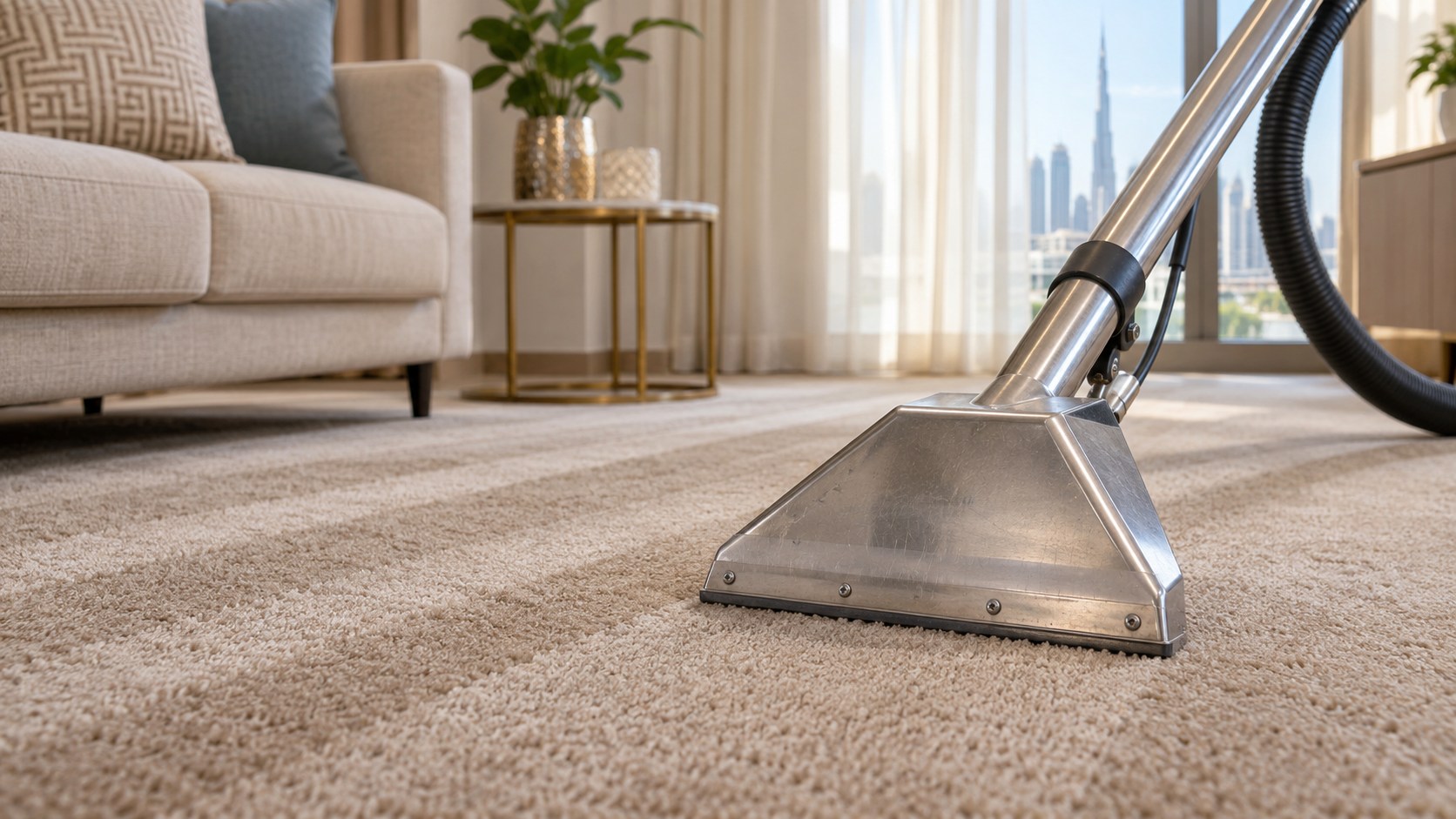
Image for illustration. Check the agreed service scope and expected results.
In this guide
Professional carpet cleaning is commonly recommended every 12–18 months, but that is a starting point rather than a fixed schedule for every home. Follow your carpet manufacturer’s care and warranty requirements, then consider its condition and use.
The Carpet and Rug Institute recommends professional deep cleaning at this interval, or more frequently when necessary. Shaw Floors gives a broader range of 6–18 months depending on traffic. Neither is a Dubai-specific legal requirement.
Adjust the schedule to your home
A lightly used bedroom carpet and a busy living-room carpet will not collect soil at the same rate.
| Condition | What to consider |
|---|---|
| Low foot traffic | Manufacturer’s interval and regular inspection |
| Busy entrances or living areas | Visible traffic lanes and embedded soil |
| Pets | Hair, accidents and recurring odors |
| Frequent spills | Prompt treatment and assessment of remaining stains |
| Dust or renovation exposure | Inspection before choosing a cleaning method |
Do not wait for severe discoloration before reviewing the carpet’s condition. Equally, a small isolated spill does not automatically require cleaning every carpet in the property.
Check the fiber and construction first
Ask the cleaner to identify the carpet or rug material before recommending a method. Wool, synthetic fibers and delicate rugs may require different products, moisture levels and handling.
Wool Safe warns that over-wetting, unsuitable chemicals and excessive mechanical action can damage wool carpets. It recommends testing the proposed treatment before wet cleaning.
Share the care label, purchase information and details of previous treatments where available. Keep invoices if the manufacturer’s warranty requires evidence of professional cleaning.
Treat spills promptly without aggressive scrubbing
Blot a fresh spill with a clean, white absorbent cloth and follow the carpet manufacturer’s instructions. Avoid scrubbing, soaking the backing or combining several stain removers.
Tell the cleaner what caused the stain and which products have already been applied. Some marks are permanent, so request realistic expectations rather than a guarantee that every stain will disappear.
For pet accidents, explain whether the problem has happened repeatedly in the same place. Ask whether the proposed treatment covers only the visible pile or whether the backing and underlay need assessment.
Plan for drying before booking
Ask which method will be used, how moisture will be extracted and what conditions are needed for drying.
Drying time depends on the material, method, moisture left behind and room conditions. Avoid accepting one guaranteed drying time for every carpet.
In a Dubai apartment, explain any limitations on ventilation or room access. Ask when furniture can be replaced and normal foot traffic resumed. Report prolonged dampness or a returning musty smell rather than covering it with fragrance.
Flooding or contaminated water requires a different assessment from routine carpet cleaning.
Maintain the carpet between professional visits
Vacuum according to the manufacturer’s guidance, paying particular attention to busy routes and edges. Use suitable entrance mats, address spills promptly and check beneath movable furniture.
Before approving professional cleaning, confirm:
- The area measured and total price.
- The method and material compatibility.
- Furniture-moving arrangements.
- Stain-treatment inclusions and limitations.
- Drying instructions and follow-up process.
A suitable schedule combines routine care with professional cleaning based on the carpet’s requirements—not a calendar alone.