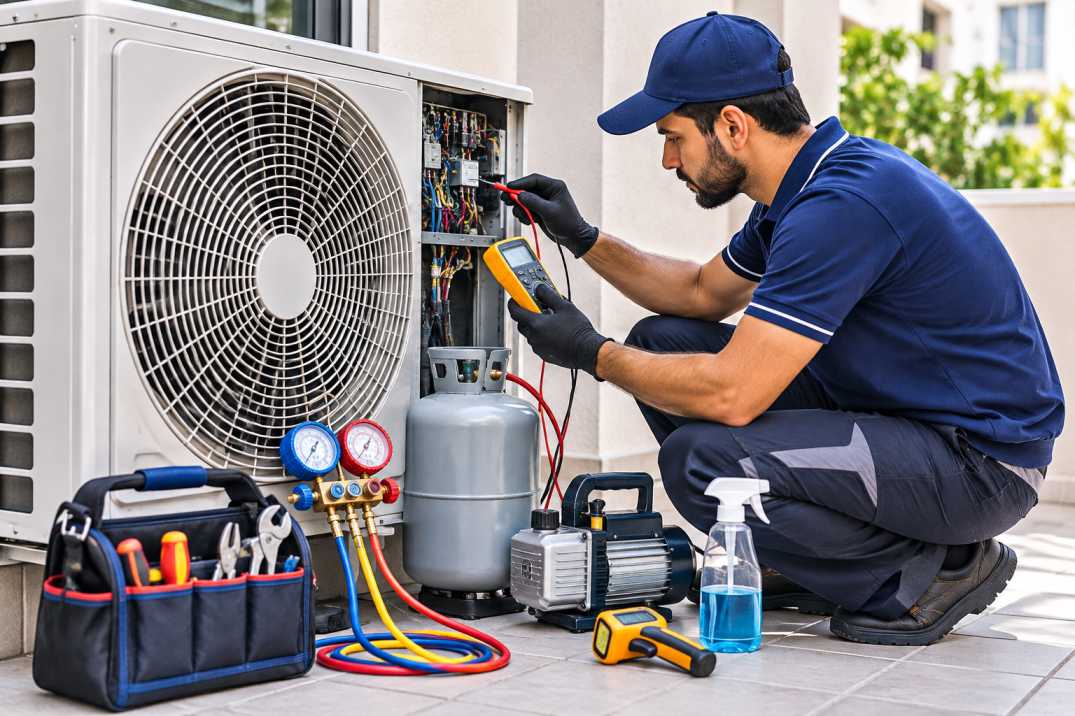
AC Still Smells After Cleaning? A Dubai Troubleshooting Brief
An AC smell that returns after cleaning needs a clearer brief. Record when and where it happens, previous work and building observations before another visit.
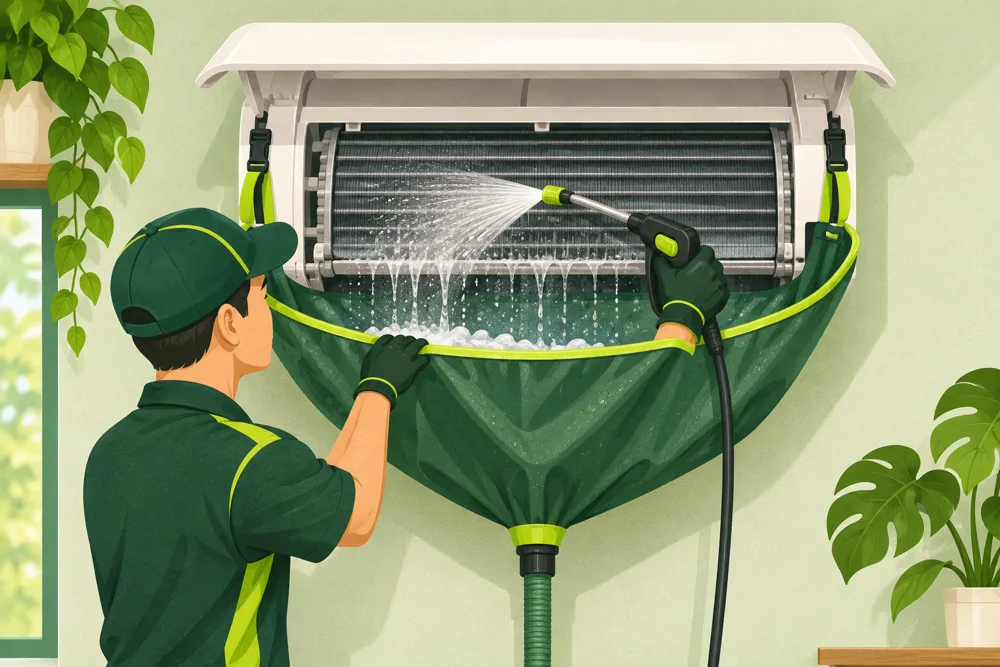
Image for illustration. Check the agreed service scope and expected results.
In this guide
The AC has been cleaned, yet the same smell comes back. A second identical appointment can be frustrating when nobody has established whether the issue is inside the unit, elsewhere in the apartment or part of a wider building concern.
Dubai community discussions describe intermittent odours that are difficult to reproduce during a visit. A useful next step is a short evidence log and a coordinated assessment, rather than choosing another treatment from the smell description alone.
Put safety ahead of identifying the smell
If a smell is strong, sudden or associated with smoke, a burning sensation, illness or a suspected gas hazard, leave the affected area as appropriate and seek urgent help. Do not remain there to collect a better description or repeatedly operate equipment to reproduce the problem.
Do not identify a refrigerant, gas or contaminant by smell. Tell the attending professional what you observed and any action already taken. Ordinary cleaning advice does not replace assessment of an unsafe environment.
Record the pattern when it is safe
| Observation | Useful detail |
|---|---|
| Location | One room, several vents, a bathroom, a corridor or an outdoor area. |
| Timing | On startup, after running for a while, at a particular time or intermittently. |
| Normal controls | The mode and settings already in use when it happened. |
| Related conditions | Visible water, a recent leak, cleaning, renovation or plumbing work. |
| Other reports | Whether building management has received similar observations. |
Keep the log factual. “Smell noticed in the living room at 10 pm while cooling” is more helpful than “the coil is contaminated” when that has not been assessed. Do not disturb ceiling panels or concealed pipework to look for evidence.
Ask what the previous clean covered
Find the invoice or service record and list the units and components treated. Were filters, accessible surfaces, coils or drainage included? Was anything inspected but left outside the agreed work? Were a product or treatment and any findings recorded?
LG’s smell guidance explains that moisture and the surrounding environment can be relevant to odours associated with an AC. That does not identify the source in your apartment. It supports asking for assessment of the conditions and history rather than assuming another fragrance or spray will resolve the cause.
Coordinate the right people
Ask the AC provider which parts of the problem their assessment covers. If the observations suggest a plumbing, shared-building or outdoor issue, ask building management to coordinate the relevant checks. One team should not promise to repair infrastructure it cannot access or control.
For an apartment using district cooling, the district-cooling contact guide can help separate the parties involved. If the smell appears around a kitchen or bathroom drain, also read the persistent drain-smell guide.
Agree the next visit’s output
Request a written explanation of what was inspected, observations made, limitations and proposed follow-up. If the issue is intermittent, agree how you will share later observations and how a recurrence will be reviewed.
Before approving a treatment, ask why it is suitable for the assessed problem, which components it covers and what preparation or aftercare is required. A stronger product is not evidence of a better diagnosis. Avoid mixing cleaning chemicals or applying household products inside AC equipment.
A useful follow-up request
The smell returns in [locations] at [times/pattern]. Previous cleaning on [date] included [recorded scope]. The smell was/was not present during that visit. Building management has advised [details]. Please assess the cause within your scope, record the findings and explain whether another trade or building investigation is needed.
Choose a provider offering the appropriate assessment and confirm the appointment. If you are comparing cleaning proposals, review what AC coil cleaning includes so the next visit has a defined scope.
Sources and reading
Reader-question background: a UAE community discussion. Community experiences help identify questions; they are not technical diagnoses or independent provider ratings.